
Hemingway and Stein’s Unequal Friendship
A Moveable FeastThis flow reframes Hemingway’s relationship with Gertrude Stein as a bond shaped by mentorship, gendered social roles, and artistic independence.
increasing Bearing strength in each event
 decreasing
Bearing strength in each eventdecreasingThe Young Writer Welcomed

The Young Writer Welcomed
A Place in the Studio
Gertrude Stein and her companion welcome Ernest Hemingway and Hadley Richardson among paintings, food, and conversation. Hemingway feels accepted by a powerful older writer.
Promise and Hierarchy
The welcome is affectionate but paternal. Stein treats the couple as promising children, establishing a relationship that offers access while defining who holds authority.
Wives at the Edge
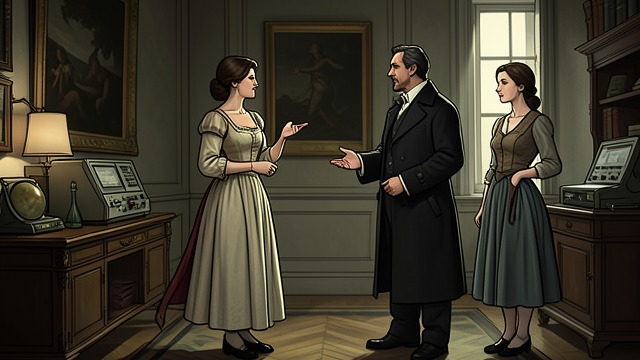
Wives at the Edge
Divided Conversation
Stein’s companion explains that she talks to the wives, while Stein speaks mainly with Ernest Hemingway. Hadley Richardson and Hemingway feel tolerated rather than fully included.
An Unequal Room
The social arrangement exposes a gendered division of attention within the friendship. The couple can enjoy Stein’s hospitality while noticing its limits.
Lessons About Writing

Lessons About Writing
Stein’s Standard
Gertrude Stein calls Hemingway’s story inaccrochable and urges him to avoid work that cannot be publicly accepted. He argues that the words are needed for the story’s truth.
A Separate Path
The disagreement leaves Hemingway without Stein’s approval but strengthens his sense that his writing is his responsibility. Mentorship does not settle the question of artistic direction.
Friendship Under Strain

Friendship Under Strain
A Loyalty Tested
Hemingway’s parody of Sherwood Anderson’s novel angers Gertrude Stein, who sees the attack as directed at one of her supporters. Her judgments of writers increasingly seem tied to personal loyalty.
Admiration Complicated
Hemingway still remembers Stein’s kindness and her genuine insights about language. His regard becomes divided between intellectual debt and frustration with her limitations.
Private Knowledge, Public Courtesy

Private Knowledge, Public Courtesy
A Boundary Crossed
Hemingway overhears Gertrude Stein pleading with her companion and leaves the apartment. The private scene becomes impossible for him to forget, though he gives no account of it to the people involved.
Courtesy Without Intimacy
He continues to perform small services and public courtesies, but the friendship no longer feels genuine in his heart. The break is inward before it is social.
during the first visits to Stein’s studio
during the first afternoon visits
during the discussion of “Up in Michigan”
after Hemingway criticizes Sherwood Anderson’s novel
after Hemingway overhears Stein’s private plea
